Default State
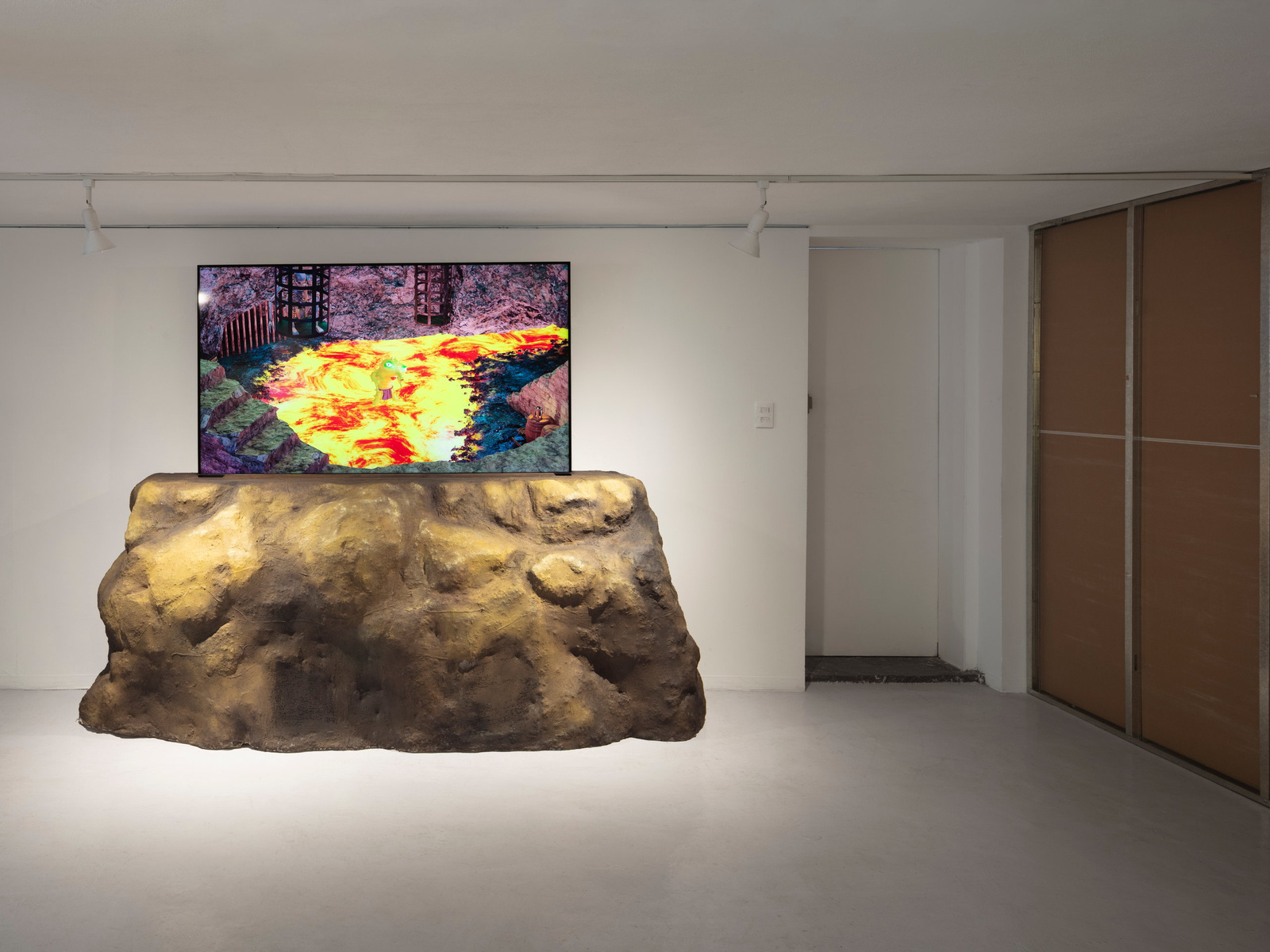
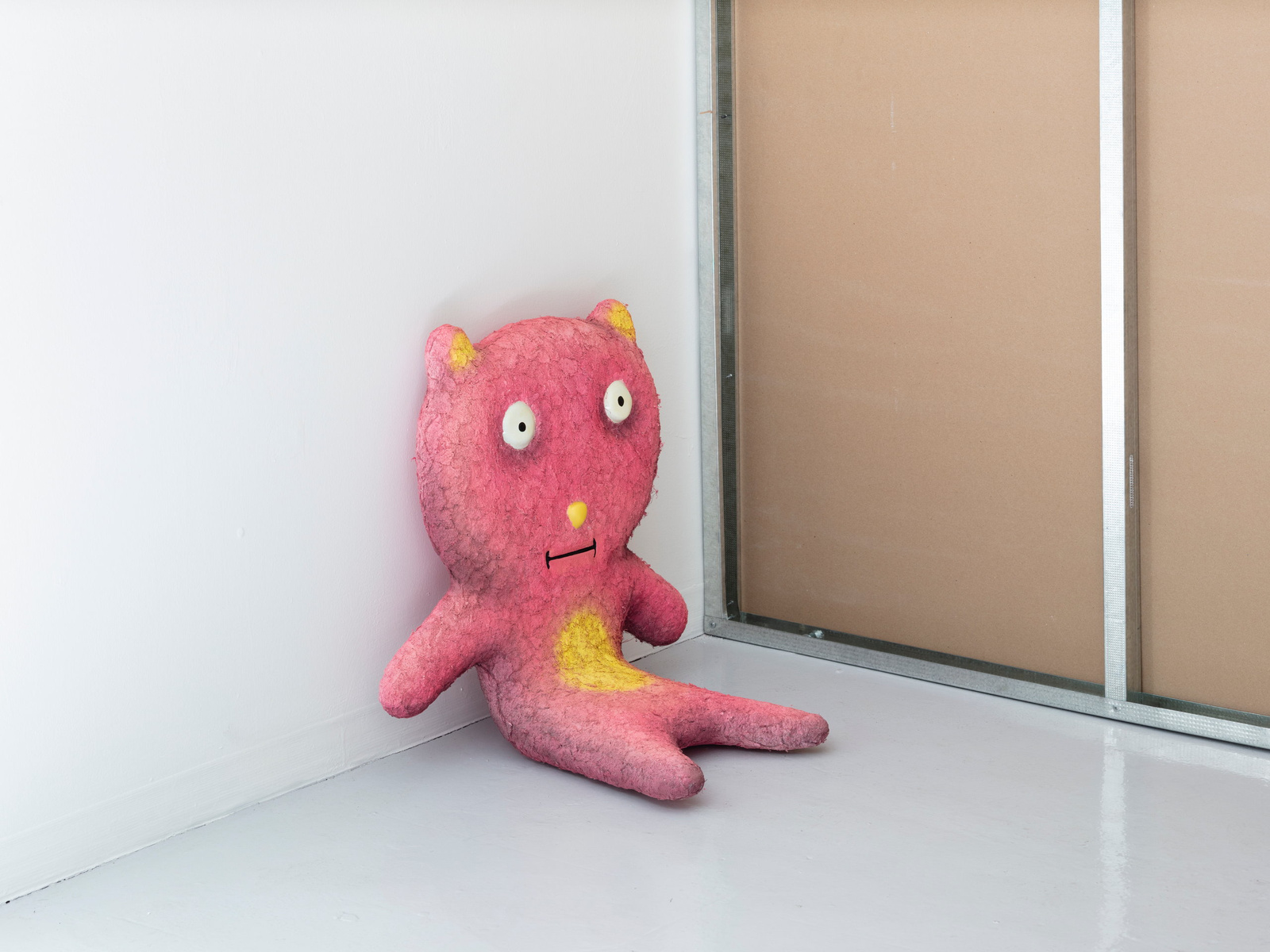
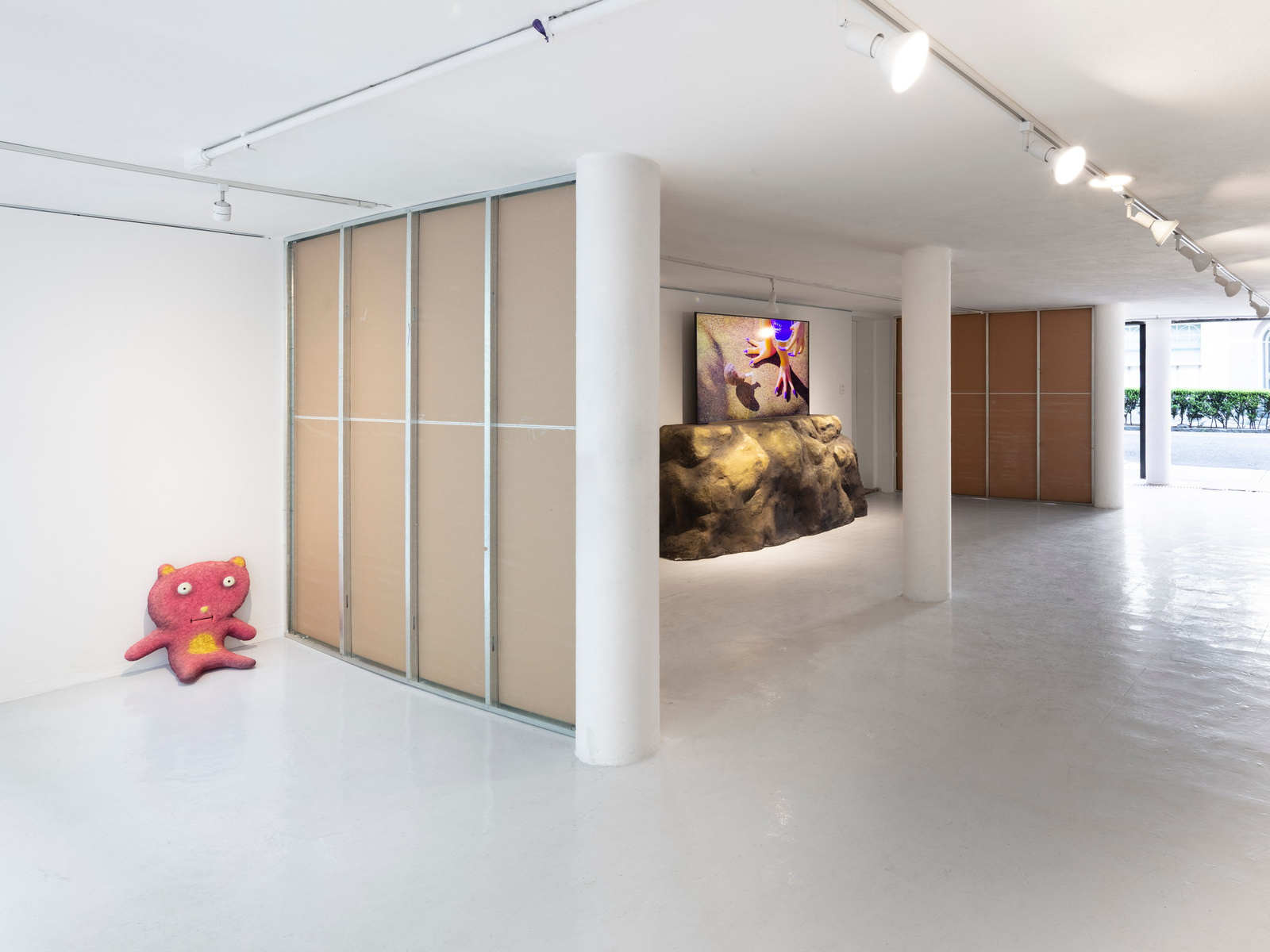
In Default State, curated by Sucesiva at galería Cromática, Ivo Loyola (Qro., 1997) presents a body of work that explores the concept of NPCs (non-playable characters), a watershed in his artistic research. Loyola introduces a world akin to a sandbox, where he allows the characters and the environment to come to life and take on meaning of their own, as if you had left the video game running for weeks without touching it. Between the viewer and the pieces, representations and traces of these characters emerge, products of the artist's virtual imagery; yet the work draws us closer to the mere contemplation of an existence tethered to the setting. An experience that awakens the desire to have been part of that game.
Text: Fernando Gress Muñoz



30 x 30 x 15 cm, 2026

30 x 30 x 15 cm, 2026

30 x 30 x 15 cm, 2026

30 x 30 x 15 cm, 2026

30 x 30 x 15 cm, 2026

30 x 30 x 15 cm, 2026



Default State
Fernando Gress Muñoz
1. The obvious falseness of hollow constructions and the purpose of characters
Beyond the early-2000s metaphor that we have become flies eternally drawn to the light of our phones and laptops, there have been, since the birth of the internet and videogames like Second Life (launched in 2003), sustained attempts to construct entire worlds meant to complement or replace our analog reality. Baudrillard's simulacrum proposes that MMORPGs (Massively Multiplayer Online Role-Playing Games) are the ultimate "copy without an original" — worlds that did not previously exist and now appear more real than reality itself.
The environments within MMORPGs have generated a kind of laboratory of social organization, where communities and meaningful roles emerge through social contracts, economic structures, and self-regulating systems of governance. Within these settings, as in other videogames, there exist entities called NPCs (Non-Playable Characters), or PNJ (Personaje No Jugable) in Spanish.
Following his 2025 exhibition at the Museo de la Ciudad in Querétaro, titled PNJ, Loyola stages the metaphysical exercise of granting agency to these characters and exploring their cyclical relationship with space-time. His work inherently reveals the conditions of existence of these characters within newly developed virtual worlds.
At first glance, these characters seem destined to repeat the same activities over and over. They are part of the very infrastructure of the digital environment, condemned to form part of its ecosystem; they are zombies condemned to repeat their same tasks, becoming part of the narrative backdrop. From an Aristotelian perspective, videogames contain clear purposes and visible progress; here, by contrast, the work depicts these characters as filler for virtual worlds, contemplating their own empty existence. They are ghosts trapped in a limbo-plane before death — they are in a waiting room, but they are at ease here.
The artist's fixation on NPCs truly lies in their presence within videogames as existential crutches: they are containers of pre-packaged meanings, reproducible in series. NPCs regularly form part of the linearity needed to follow a guaranteed progression in games where you solve a chain of tasks to arrive at the same resolution. In other words, the little dude tells you to go kill the other evil little dude at the end of the level, then another little dude explains how to kill it, you end up killing it, and you finish the game — congratulations!
Within this authoritarian narrative structure, where meanings are created by developers rather than by players, Loyola proposes an alternative reality in which these creatures take on another kind of life as the filler of the membrane within the created environment. From this contemplation, negative molds are presented representing some of these characters: the mold as the synthetic form of a fossilized figure. Ultimately, the characters within the exhibition — that hidden teddy, those little dudes on the screen — are prosthetics of meaning destined for this plane.
Over a fake rock, an omnipresent camera reveals afterlives, vestiges of what that world once was. Loyola shows that these characters still matter: you are here, watching them. A literalization is granted to the lives of some flowers and orange beings that now possess emotional range and narrative weight in their actions. The art direction of these animations suggests that, for a moment, these 3D figures are more real than we are.
2. On the useless proposal of time and labor, and a different kind of boredom
The artist's animations evoke a posterior reality: the scene takes place after you leave the game running for hours, after the endless repetition of activities gives way to a superficial representation governed by fictional rules and conditions.
By replicating the ambiance of the animations through wallpaper, an artificial ecosystem is built — one with the feel of a safari entrance or a resort on the Yucatán Peninsula. To bring the spatial logic of the 3D render — hollow by nature from the outset — into the exhibition hall through the analog glitch of pasting wallpaper is a scenographic exercise that delimits fragmented chunks of falseness within the same spatial simulacrum.
Eating doesn't matter, and hunger doesn't exist here. A kind of new freedom emerges from the liberation of all desires and expectations. There is no consciousness arising from a condemnation, because there is comfort within the repetition — or apparent imprisonment — of boredom. These perpetual worlds never tire and continue without any trouble.
A large portion of the missions within videogames follow a structure that requires the player to invest a certain amount of time in order to achieve a quantifiable objective for the sake of receiving a reward. Again and again. Videogames are a space that functions as an escape from real life; paradoxically, they are at the same time a game and a simulation that reinforces the values of Western consumption-based economies. As researcher Scott Rettberg notes about World of Warcraft, such games offer "a compelling and detailed simulation of the process of becoming successful within capitalist societies."
Consider the relationships between the concepts: WORK — TIME — PLEASURE — PRODUCTIVITY.
What counts as wasted time?
. Spending 1,000 hours leveling up your Pokémon = "wasted time"
. Spending 1,000 hours on your phone or watching series on Netflix = also considered "wasted time," though more socially acceptable
. Spending 1,000 hours at a job you hate that pays well = "productive time"
. Spending 1,000 hours painting abstract canvases that don't sell = ?
Who decides which investment of time holds value?
The final key to understanding the philosophical exercises at play within these metaverses lies in the possibility of a utopian artificial paradise that could only exist under certain given conditions — conditions bound to social contracts, community, the work-time relationship, and economic resources. In such an environment, given that no great objective would remain to reach the utopian level of paradise, we would all be playable characters within this hypothetical world: no one would be resorting to endless tasks to generate resources, reach the next level, survive, and finish the story.
Infinite attempts at simulation to reach a paradise.